
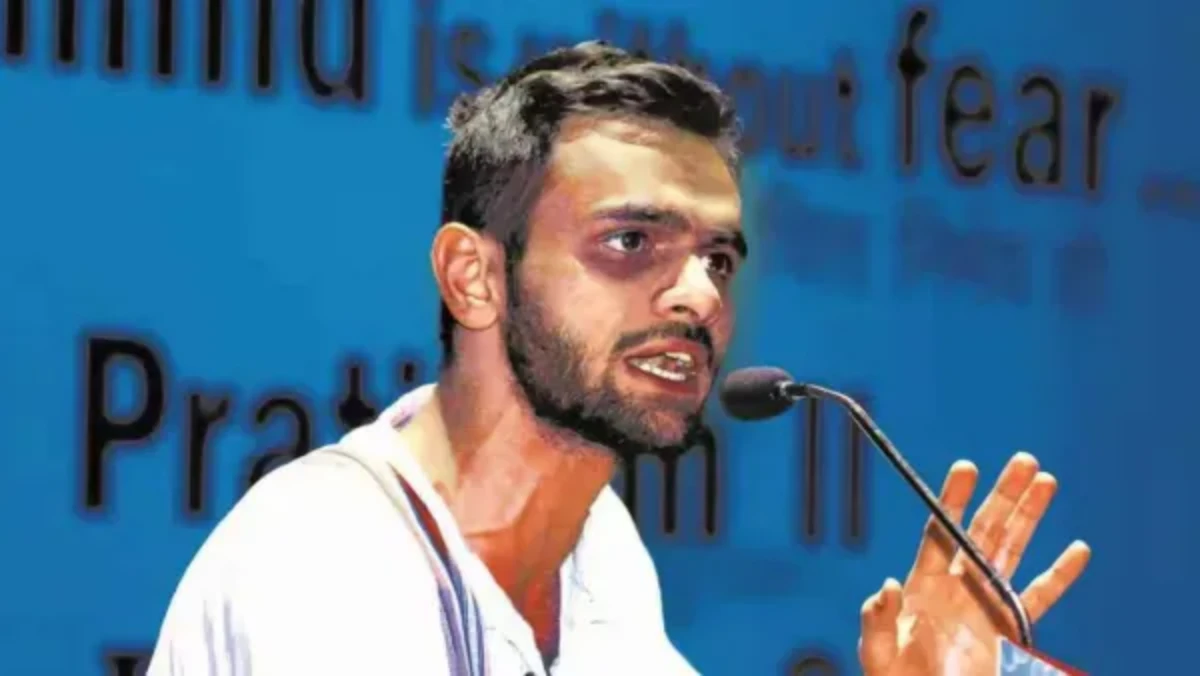
Umar Khalid bail hearing update: Former JNU student and activist Umar Khalid, who has been charged under the Unlawful Activities (Prevention) Act (UAPA) in connection with the 2020 Delhi riots, continues to await a decision from the Supreme Court. The riots had erupted during protests against the Citizenship Amendment Act (CAA) 2019, leaving 53 people dead and hundreds injured.
Since his arrest in 2020, Umar Khalid’s bail plea has undergone numerous hearings across different courts. Here’s a detailed timeline of Umar Khalid’s bail case and the major court events linked to the Delhi riots investigation.
2020: Arrest and Initial Charges
- September: Umar Khalid was arrested under the UAPA by Delhi Police for his alleged role in conspiring and instigating the Delhi riots.
- October: Another FIR was filed against Khalid for vandalism and arson during the violence.
- November: The Delhi Police filed a chargesheet against him, officially beginning the trial process.
2021: First Bail and Continued Custody
- April: A Sessions Court granted bail to Khalid in the vandalism and arson case. However, he remained in judicial custody under UAPA charges related to the conspiracy behind the riots.
- July: Khalid filed a bail plea in the UAPA case, seeking relief from the stringent provisions of the act.
2022: Bail Plea Rejected by Delhi High Court
- March: The Sessions Court denied bail to Umar Khalid.
- April: Khalid approached the Delhi High Court to challenge the denial.
- October: The High Court rejected his bail plea, stating that the prosecution had presented a prima facie case against him.
- December: He was granted interim bail to attend a family event, with restrictions on speaking to the media.
2023: Case Moves to the Supreme Court
- April: Umar Khalid moved the Supreme Court after the Delhi High Court’s rejection.
- August: Justice P.K. Mishra recused himself from hearing the bail plea.
- October: The Supreme Court issued a notice to the Centre, seeking its response to Khalid’s plea challenging certain provisions of the UAPA.
2024: Bail Pleas and Court Transfers
- February: Khalid withdrew his bail plea from the Supreme Court, deciding to “try his luck” in the trial court after repeated adjournments.
- March: He again filed for bail before a Delhi trial court.
- May: Additional Sessions Judge Sameer Bajpai dismissed the bail plea, keeping him in custody.
- July: Justice Amit Sharma recused himself from hearing Khalid’s case in the Delhi High Court.
- December: The trial court granted seven days of interim bail for him to attend his cousin’s wedding.
2025: Supreme Court Hearing and Latest Developments
- July: The Delhi High Court reserved its order on the bail plea of Umar Khalid and other co-accused.
- September: The court ruled that the Delhi riots were not a spontaneous protest but a “well-planned and orchestrated conspiracy,” and therefore declined bail to Khalid and others.
- October: Umar Khalid moved the Supreme Court against the High Court’s denial of bail.
- During the latest hearing, the Supreme Court criticized the Delhi Police for seeking additional time to file a reply, saying they had already been given “sufficient time.”
- The Delhi Police argued that the 2020 riots were part of a criminal conspiracy aimed at regime change, and strongly opposed bail for Khalid and co-accused Sharjeel Imam.
Current Status
As of October 2025, Umar Khalid’s bail plea remains under consideration in the Supreme Court. The case continues to be one of the most closely followed UAPA trials in India, with widespread public and political attention surrounding it.
Conclusion
The Umar Khalid bail case highlights the complexities of the UAPA law and its impact on political dissent and freedom of expression. With multiple rejections, adjournments, and judicial recusals, the case serves as a long-running example of how UAPA trials unfold in India’s justice system. All eyes are now on the Supreme Court’s next hearing, which will decide whether Umar Khalid can finally secure bail after five years in custody.
Leave a Reply